The garage is the most-used room nobody finishes
Think about how often you walk through your garage. Twice a day for the commute, a few more times for groceries, sports gear, the recycling bins, the dog. In most Anthem homes it’s the real front door. Yet while the kitchen has quartz counters and the entry has tile, the garage floor is still the raw concrete the builder left behind.
Raw concrete doesn’t age gracefully. It absorbs oil and coolant, turns blotchy where sprinklers splash under the door, and sheds a fine gray powder that ends up on every shelf and storage bin. If someone tried a weekend paint kit, there may also be peeling patches where the tires sit.
A professionally installed garage coating changes all of that. The floor becomes a sealed, textured, easy-to-clean surface that looks like it was designed along with the rest of the house. It also tends to change how the space is used — we often hear about home gyms, workbenches and hobby corners appearing once the floor is finished.
What you gain
Stops the dust
Sealing the slab ends the constant powdering that coats tools, bikes and anything stored on the floor.
Shrugs off spills
Oil, fertilizer, pool chemicals and road grime stay on top where a rag or degreaser removes them.
Handles hot tires
A properly bonded, high-build system resists the softening and lifting that ruins thin paints.
Hides everyday mess
Multi-color flake disguises trail dust, sand and small scuffs between cleanings.
Brighter, safer space
Light blends reflect overhead light, and the flake texture gives shoes something to grip.
Keeps its color
A UV-stable topcoat prevents the yellow band that standard epoxy develops near the door.
Four systems, chosen around how you use the space
After seeing the slab and hearing how the garage is used, we’ll recommend one of these. Each is built on the same ground-and-repaired foundation.
Full-broadcast flake
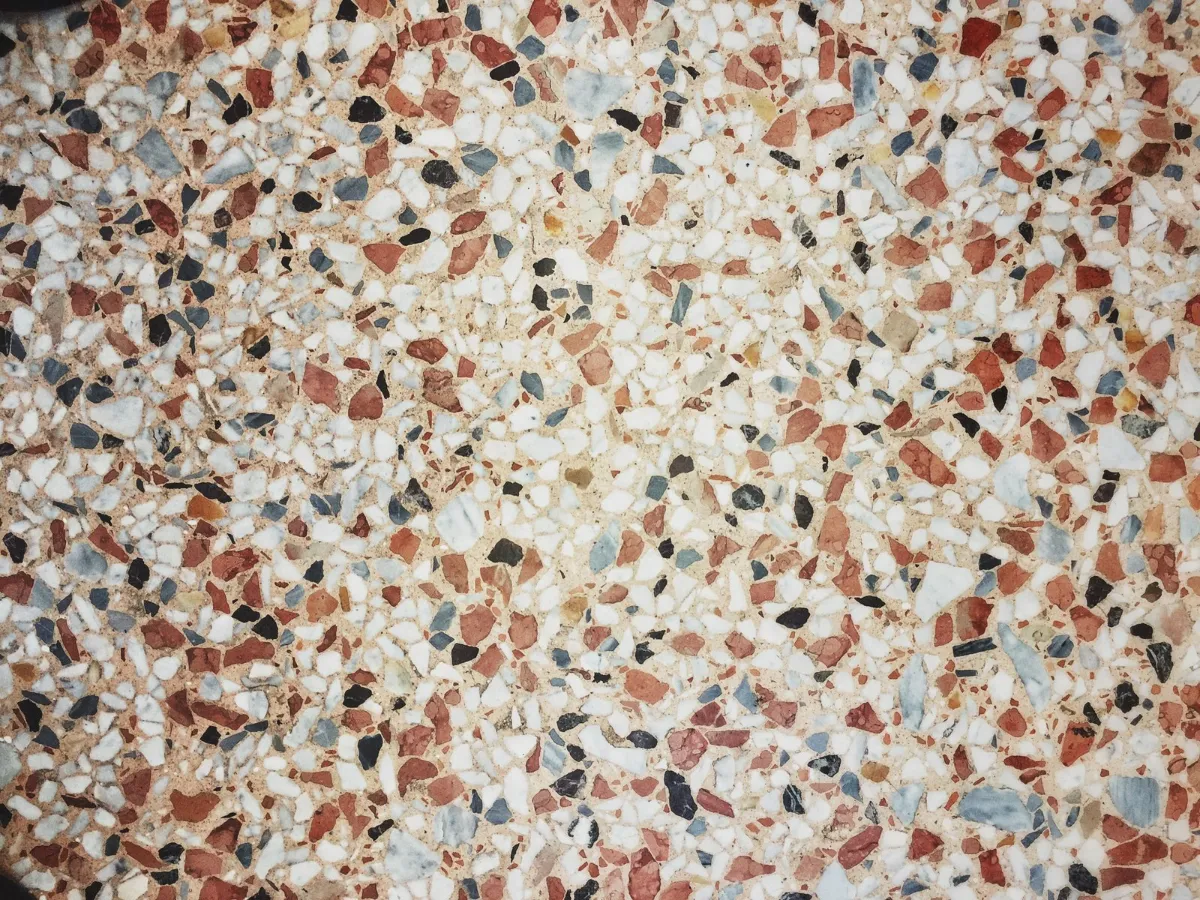
Flake covers the base completely, then a clear topcoat seals it. The most forgiving finish for dust and tire marks and our default for busy family garages.
Partial flake
A lighter scatter over a solid base for a cleaner, contemporary look. Better suited to tidy garages than working shops.
Solid color
A uniform gray, greige or tan with a clear protective top. Clean and simple, and dropped hardware is easy to spot.
One-day polyaspartic
Fast-curing chemistry lets us finish the entire floor in one visit. Ideal when the garage can’t be out of action for long.
How the work happens
- 01
Clear the floor
Everything resting on the slab is moved out. Wall cabinets and overhead racks can stay put.
- 02
Protect and grind
Walls and the house door are masked. A diamond grinder with a HEPA vacuum removes the weak surface layer, old paint and sealer.
- 03
Repair
Pits, gouges and fractures get patched, then sanded level with the slab. Control joints are cleaned and finished to your preference.
- 04
Base and flake
Colored resin is laid down and handfuls of chips are tossed across it until no base shows.
- 05
Scrape and topcoat
Once cured, loose chips are scraped and vacuumed. A clear UV-stable topcoat seals the floor and stem walls.
- 06
Hand-off
We walk the finished floor with you and confirm timing for foot traffic and vehicles.
Post-tension slabs: why it matters for your garage
A large share of homes in Anthem sit on post-tension foundations. Inside the concrete are steel cables pulled tight after the slab cures, which help it resist cracking from soil movement. They’re a smart engineering choice — but they mean you should never cut, core or drill into the slab without knowing exactly where those cables run.
Floor coating preparation is a surface operation. Diamond grinding removes a fraction of an inch from the top, nowhere near the cables. We don’t saw-cut control joints, chase cracks with deep cuts or anchor anything into the floor. If a repair ever looks like it would need to go deeper, we stop and discuss it with you before doing anything.
Coating a post-tension slab is safe. Cutting into one is not — and our prep never does.
Three-car, tandem and RV-height garages
Anthem has plenty of oversized garages: three-car layouts, tandem bays that fit a boat or trailer behind a car, and tall RV doors on custom lots in Desert Hills and New River. Big floors are more forgiving visually but less forgiving to install. Flake has to be broadcast evenly across a wide area, and the topcoat has to keep a wet edge from one end to the other.
We plan large garages section by section, with enough crew to keep each coat moving. Heavier systems or a polyurea base can be added in the bay that holds the trailer or toy hauler, where point loads and turning tires are toughest.
Why kits and paint don’t last here
Most garage kits depend on an acid etch for adhesion. On a newer, dense slab — or one with builder sealer or curing compound on it — acid barely scratches the surface. The thin coating sits on top, and the first summer of hot tires coming home from the freeway starts lifting it. We’re often asked to remove failed kits that are only a year or two old.
Professional systems are thicker, bond to mechanically opened concrete, and include repair work that a kit simply covers up. That’s the difference between a floor you redo and a floor you forget about.
Garage floors in the Anthem climate
Anthem sits a little higher than central Phoenix, but summer still brings long stretches of triple-digit heat. A closed garage gets hotter than the outdoors, and a slab in direct afternoon sun can be very warm to the touch. In the hot months crews arrive at dawn and switch to resin speeds designed for warm concrete.
Monsoon season adds blowing dust and occasional flooding across driveways. Flake floors hide the dust, and the sealed surface lets you hose out mud without it soaking into the concrete. If water routinely runs under your garage door, we’ll mention options for the threshold so the new floor stays dry.
Choosing a flake blend
Most people choose between warm and cool. Warm blends — sand, tan, cream and a touch of terracotta or brown — pair naturally with Anthem’s stucco, stone and tile roofs and hide the tan dust that drifts in from the desert. Cool blends — grays, whites and charcoal — look crisp next to white garage doors and modern cabinetry.
We bring full-size sample boards to the estimate. Lay them on your floor with the door open and closed; garage lighting changes how colors read more than most people expect.
Caring for your coated garage
A soft push broom or dust mop handles most weeks. For a deeper refresh, a soft brush, a bucket of mild soapy water and a floor squeegee do the trick. Skip acid-based cleaners, which can haze the topcoat. A citrus degreaser takes care of tire marks.
Put a mat under the spot where the trailer tongue jack rests, and a drip pan under any vehicle that sits for long stretches. That’s about all the maintenance a well-built floor needs.
Common questions
When can I park again?
Polyaspartic finishes typically take footsteps by morning and tires a few days after, faster when it’s warm. We give you exact timing for your system.
Do you coat the short walls around the garage?
Yes. Wrapping the coating up the low perimeter walls gives a crisp border and keeps hose water off bare concrete.
What about my water heater and softener?
We coat carefully around fixed equipment and seal the edges neatly. If a unit can be safely moved for a short time, we can coat underneath.
Will the floor be slippery when wet?
Flake floors have natural texture. For extra security near the house door or where water tracks in, we add fine grit to the topcoat.
Can you remove my old garage paint?
Yes. We grind off old paint and failed coatings completely so the new system bonds directly to the concrete.
Is grinding safe on a post-tension slab?
Yes. Grinding only affects the top surface. We never cut, core or drill into post-tension slabs.
Does someone have to stay home while you work?
Only for the morning hand-off and the final look-over. Plenty of homeowners head to work or the trail in between.