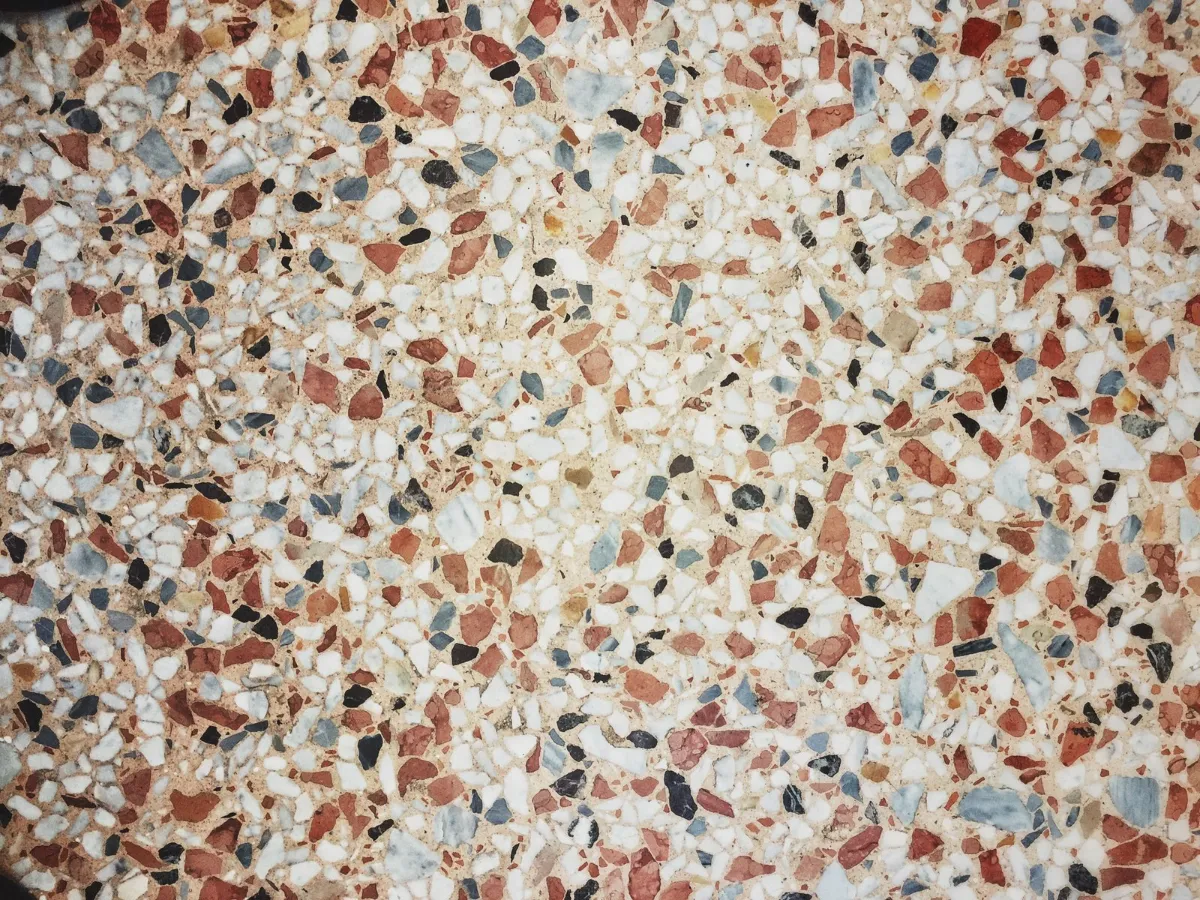
How a flake floor is built
A flake floor — also called a chip or fleck floor — starts with a tinted base coat rolled onto freshly ground concrete. While that layer is still wet, thin vinyl chips are thrown by hand across the surface. They settle into the resin and lock in place as it cures. Loose chips are knocked down and vacuumed up before a clear protective layer seals the lot.
Up close, you see individual chips in several colors. From standing height, they blend into one rich, stone-like tone. That visual blending is what makes flake so practical. Dust, sand, small scuffs and the occasional drip disappear into the pattern instead of standing out against a plain surface.
Because the chips add body and a slight texture, flake floors are also tougher and more slip-resistant than smooth paint. It’s no surprise they’re the most requested garage finish in Anthem.
Why flake works so well
Camouflages dust
Multi-tone chips hide trail dust, sand and pollen between sweeps.
Texture you can feel
A gentle orange-peel surface that grips better than gloss — with optional grit for more.
Thicker and tougher
Chips add build to the system, helping it resist dropped tools and dragged bins.
Spot-repairable
If something heavy chips the surface, a repair blends far more easily than on a solid floor.
Design flexibility
Dozens of standard blends, plus custom mixes for a home’s exterior palette.
Desert-inspired color directions
Anthem’s architecture leans toward warm stucco, stone veneer and clay tile, framed by mountains that shift from tan to rose at sunset. Flake blends can echo that palette or offer a cool counterpoint.
Terracotta & sand
Rust, cream, tan and a little charcoal — warm and grounded, and the best at hiding reddish dust.
Canyon stone
Browns, beige and gray layered like natural granite. Pairs well with stone accents and wood cabinetry.
Slate & cloud
Charcoal, gray and white for a crisp, contemporary look beside white doors and modern finishes.
Custom blends
Mixed from individual chip colors to tie into your stucco, trim, roof tile or a favorite accent.

Chip size and coverage
Two decisions shape the character of a flake floor beyond color. Chip size changes the scale of the pattern: quarter-inch chips give the classic garage look and hide the most, while eighth-inch and micro chips read finer and suit interiors. Coverage changes the density: full broadcast buries the base completely for maximum texture and hide, while partial broadcast lets the base color show for a lighter, airier finish.
For most Anthem garages we recommend quarter-inch, full broadcast. For laundry rooms, casitas and entries, many clients prefer micro chips in a partial or full broadcast.
Our flake installation
- 01
Diamond grind
The slab is opened with diamond tooling and HEPA dust collection. Post-tension slabs are ground at the surface only.
- 02
Repair
Pits, gouges and fractures get patched, then sanded level with the slab.
- 03
Base coat
A tinted base is rolled out section by section; its color subtly tints the finished look.
- 04
Broadcast
Chips are tossed upward and allowed to fall evenly until the base is fully covered.
- 05
Scrape & vacuum
After cure, standing chips are knocked down for a smooth, comfortable surface.
- 06
Clear topcoat
A UV-stable clear coat seals the chips and sets the sheen. Grit is added here if requested.
Craftsmanship you can see — and feel
A great flake floor looks even from every angle. That comes from broadcasting in a planned pattern so no bare spots or heavy patches appear. It feels good underfoot because the floor was scraped thoroughly before the topcoat, removing chips that stood on edge. And it stays that way because the topcoat was applied thick enough to fully lock the chips in.
These steps aren’t complicated, but they take care and time. They’re also the steps most often rushed. Run your hand across a finished floor and you can tell immediately whether they were done properly.
The difference between a good flake floor and a great one is in the scraping and the topcoat.
Flake beyond the garage
Flake isn’t just for parking. It’s a practical choice for laundry rooms and mudrooms, where it hides lint and grit and adds grip near the washer. Covered patios and courtyards benefit too, as long as the topcoat is UV-stable and textured for wet feet. Hobby shops and home gyms appreciate how easily sawdust and chalk sweep up.
In commercial spaces — restrooms, locker rooms, break rooms and retail backrooms — flake offers durability and easy cleaning at a reasonable cost.
Flake floors in Anthem
Dust is a fact of life at the edge of the desert, especially during monsoon season and windy spring days. A mid-tone flake blend is the single best way to keep a garage looking clean between sweeps. Trail runners and mountain bikers, of whom Anthem has plenty, will appreciate it most.
Sun is the other factor. Open garage doors let strong afternoon light reach deep into the floor. A sun-proof clear layer goes over every chip floor we build, so neither the flakes nor the base drift toward amber.

Keeping flake looking sharp
Sweep or dust mop weekly. Every so often, scrub with a gentle brush and mild soapy water and push the rinse water out the door. Avoid acidic cleaners and wire brushes. Wipe up oil drips promptly — they won’t stain the sealed surface, but a clean floor simply looks better.
Where the money goes on a chip floor
Size matters, but preparation matters more. Bare, healthy concrete grinds fast; paint, oil-soaked patches and a web of cracks all slow the job down. Full broadcast uses more flake than partial, and custom blends or micro chips can cost a little more. Single-day installs rely on quicker, pricier chemistry than a slower epoxy build. Your quote lists each of these, so you can compare apples to apples.
Flake versus other finishes
A plain color looks tailored and makes a lost bolt easy to spot, yet every footprint and dusty tire track stands out. Metallic floors are striking but better suited to interiors with less grit. For the average garage, chip floors hit the balance — hard-wearing, easy on the eyes and tolerant of mess. That balance is why it accounts for most of the garage floors we install.
Matching flake to your home’s exterior
A garage floor is visible whenever the door is open, so many homeowners like it to relate to the outside of the house. Pull a color from your stucco, trim, roof tile or stone veneer and look for a blend that includes it. Warm exteriors with tan stucco and clay roofs pair naturally with terracotta and sand blends; homes with gray stone and white trim look sharp with slate and cloud mixes.
Bring a photo of your home’s exterior to the estimate, or simply step outside with the sample boards. Seeing the flake next to the actual stucco usually makes the decision easy.
A note on hot tires and flake
Warm rubber can ghost onto any finish; the speckle disguises it, and an orange-oil cleaner wipes it off the sealed surface. If you regularly park immediately after long summer drives, a quick wipe now and then keeps the floor looking new.
Common questions
Do the chips come loose?
No. They’re held by the base coat beneath and sealed by the clear coat above.
Is flake comfortable barefoot?
A well-scraped, properly sealed flake floor has a gentle texture that’s comfortable barefoot. Added grit makes it slightly coarser.
Can you match my house colors?
Yes. Custom blends can be mixed to complement your stucco, trim or roof tile. Bring a sample or photo.
Full or partial broadcast?
Full broadcast hides the most and is best for busy garages. Partial gives a lighter, more modern look for tidier spaces.
Will the colors fade near the door?
Not with our UV-stable topcoats, which protect the chips from sunlight.
Can flake go outside?
Yes, with an outdoor-rated topcoat and texture suited to wet conditions.
Can you coat just part of the garage?
It’s possible, though one continuous finish nearly always looks better. We can discuss lower-cost options, like partial broadcast, if budget is a concern.
Is flake hard to keep clean?
No. The sealed topcoat makes it a smooth surface with a gentle texture; a dust mop handles most weeks.
Can flake go in a laundry room?
Yes. Micro or eighth-inch chips in a light blend work beautifully in laundry rooms and mudrooms, adding grip near the washer.